
Jim Weston UAS Part 107 Pilot since 2018
DSP vs. Pilot Subcontractor vs. Hybrid: Understanding the Real Structure of the Drone Industry
A question was proposed to me just recently that made perfect sense:
What is the difference between a DSP, a pilot subcontractor—and now, a Hybrid?
If you’ve been flying commercially for any length of time, you’ve probably reached the same crossroads most operators face:
Am I a drone pilot looking for work?
Am I a Drone Service Provider (DSP)?
Or am I somewhere in between?
These terms get tossed around as if they’re interchangeable—but they describe very different realities in the field. Understanding the difference isn’t about ego. It’s about choosing the right lane for your growth.
What a True DSP Really Is
A true DSP is not just a pilot with a logo and an LLC. A DSP is a structured service operation with:
- Multiple active clients
- Systems for scheduling, invoicing, and job tracking
- Data delivery workflows
- Safety documentation
- Contractor management
- The ability to manage multiple projects simultaneously across regions or states
- Does not always have full time pilots, if they do, they are consultants for the most part
Scaled DSPs often:
- Manage national or regional contracts
- Oversee large subcontractor networks
- Handle recurring enterprise-level work
- Provide professional-level redundancy and reliability
Simply put:
A DSP is a service business. Not a single pilot.
What a Pilot Subcontractor Really Is
Most working pilots today operate as subcontractors—even many who aspire to DSP status.
A pilot subcontractor is a freelance Part 107 operator who:
- Performs field work for larger DSPs
- Does not own the client relationship
- Is paid per mission or per contract
- Focuses on execution, not client management
This model works because it makes economic sense:
- The DSP wins and manages the contracts
- The pilot (sub-contractor) performs the local field work
- Both sides benefit
There is nothing “less than” about being a sub-contractor. In fact, most companies who award contracts to new DSPs trust those who start out in the trenches as it’s the primary runway most pilots use to gain:
- Experience
- Flight volume
- Professional discipline
- Industry reputation
Every serious DSP started right here.
Introducing the Hybrid Role — The Missing Middle
This is where Hybrid membership enters the industry equation.
We recognize that not all operators fit cleanly into the “pilot only” or “full DSP” categories. Many are actively transitioning—running small service operations while still subcontracting under larger DSPs.
A Hybrid operator is:
- A working pilot
- Actively building a client base
- Managing limited contracts
- Still subcontracting for scale and stability
- Transitioning into full time DSP
They live in both worlds, and they’ve chosen the right path into becoming a trustworthy DSP.
Hybrid members:
- Operate their own small contracts
- May manage limited subcontract pilots
- Are not yet fully scaled DSPs
- Are actively learning system-level operations
- Building trust in the Drone Industry as they scale
This stage is intentional, not accidental. It allows pilots to grow into DSPs responsibly—without overreaching before they have the systems, staffing, and cash flow to support true scale.
Hybrid is not a shortcut.
Hybrid is the bridge.
Why the Confusion Exists
Because ambition often outruns infrastructure.
Many pilots adopt the DSP label the moment they pass the test. They launch a brand, build a website, and market themselves as a DSP long before they have:
- Contract workflows
- Client retention systems
- Subcontractor processes
- Multi-job operational capacity
That gap between title and reality is where many businesses stall or burn out.
Why the Confusion?
Because ambition gets ahead of experience—and that’s normal. Many pilots begin building their brand the moment they pass the test. They set up a business name, get a website, start marketing, and adopt the DSP label long before they have the workflow or client base to match it.
Why Scaled DSPs Rely on Subcontractors
No DSP can station pilots in every ZIP code. Subcontractors are their national workforce.
They rely on:
- Vetted regional pilots
- Professional on-site representation
- Consistent data capture
- Reliable turnaround times
For subcontractors, this creates access to:
Exposure to real-world operations at scale
Recurring revenue
Industry-standard workflows
Experience with large contracts
Why This Distinction Matters
Understanding your current role helps you grow correctly.
A subcontractor focuses on:
- Skill development
- Portfolio building
- On-site professionalism
- Mission execution
A Hybrid operator focuses on:
- Learning client management
- Running limited contracts
- Testing subcontractor workflows
- Building operational systems safely
A DSP focuses on:
- Client acquisition
- Contract scaling
- Workforce management
- Infrastructure, liability, and long-term growth
Each stage carries more responsibility—and more reward.
How 107 Pilots United Ties It All Together
TThis is where the industry finally gets a real growth pathway.
For pilots:
- Direct access to verified DSPs
- Tools to build credible professional profiles
- Education and certification pathways
- A roadmap from subcontractor → Hybrid → DSP
For Hybrid operators:
- Visibility to both pilots and DSPs
- Controlled expansion without overexposure
- Contract tools without premature scaling
- A safe runway toward DSP status
For DSPs:
- Regional pilot discovery
- Faster vetting and deployment
- Scalable subcontractor pipelines
- Reduced operational friction
And for the industry:
Stronger service standards
Sustainable growth
Proper skill maturation
Fewer failed businesses
Stronger service standards
The Bottom Line
Every DSP begins as a pilot.
Many succeed through the Hybrid stage.
But not every pilot is ready to be a DSP today.
There is pride in subcontract work.
There is strength in the Hybrid climb.
There is responsibility in scaled DSP operations.
The more honest we are about the structure of this industry, the stronger it becomes—for pilots, DSPs, and the clients who depend on both.
This clarity is exactly what 107 Pilots United was built to deliver.
Who Are You, Really?
Commercial or Recreational: Which Path Is Right for You as a Drone Pilot?
It all comes down to one thing: intention.
I’ve considered joining recreational drone groups myself. There’s something energizing about stepping beyond your creative comfort zone and exploring the world from a new perspective. You’ve just spent $600—or several thousand dollars—on a flying camera. Why not have fun with it?
For example, my most expensive traditional camera is the Canon 6D. Yet it doesn’t come close to the cost of a DJI Mavic 2 Pro equipped with a Hasselblad sensor. (Quick side note: if you’ve ever seen the iconic “Blue Marble” photo of Earth taken from the Apollo missions—that was captured with a Hasselblad.)
But for many drone owners, the excitement soon turns into curiosity: Can I turn this into a business?
And that brings me to the most important piece of advice I can offer:
👉 DO YOUR RESEARCH.
Seriously—this can’t be overstated.
A common misconception among newly licensed FAA Part 107 pilots is that the license itself is a fast pass to financial success. The reality? It’s much more nuanced than that.
Every market has a niche. And it’s your job to figure out what your local area actually needs.
No—real estate photography alone probably won’t keep you busy unless you’re a top-tier salesperson in a market with zero competition. That was my mindset, too, back when I first thought I had mastered my “four-propeller flying enterprise.” It didn’t take long to realize just how crowded the space really was.
Here’s the truth:
Many agents are getting their own Part 107 licenses to save money.
Wedding jobs? Often handled by a friend or cousin with a big-box store drone.
The market is saturated, and yes—there will always be someone willing to undercut your price.
Now, I’m not saying you can’t find success in those areas. But if you take the time to understand what your drone can really do, and where those capabilities fit into unmet needs in your area—you’ll be miles ahead.
Over the next few weeks, I’ll be sharing some of the research I’ve done and the insights I’ve picked up along the way. These are lessons I wish I had early on—maybe they’ll help you decide whether to turn your hobby into a business or just enjoy the creative freedom recreational flying brings.
Whichever path you choose, just remember:
It takes time—but it’s worth it.
No Guts, No Glory
What Does It Really Take to Be a Drone Pilot?
If you think being a drone pilot is the best job ever because you get to play with drones all day…
Well—you’re half right.
Learning how to fly a drone and take photos is the easy part. But taking great photos, understanding their value, and knowing how to turn those skills into a sustainable career? That’s a whole different level.
When I flew my first drone, my knowledge was limited to the basics: it had propellers, a camera, and it looked fun. But I quickly realized I needed to forget the camera for a while and just learn to control the aircraft. It wasn’t long before I found myself trying to fly backward when the drone was facing me—only to discover it was moving forward instead. I couldn’t even tell the front from the back at first. The learning curve was steep… but manageable.
For a solid month, I flew that drone like it was my personal rival. I refused to let it beat me. And eventually, I gained full control. That’s when the real fun began—finding creative ways to photograph the world from above. Aerial imagery was still fresh in the marketing world, and as an entrepreneur, I dove deep into researching how to turn this passion into a business.
On November 7, 2018, I passed the FAA Part 107 exam and officially became a licensed commercial drone pilot. I was all in.
But certification is just the beginning.
I spent nearly a year honing my flight skills, refining my photo techniques, and editing footage—every single day. I’d spend my mornings flying and my evenings sorting through thousands of images (sometimes 1,500+ in a day). Over time, flying and filming became second nature. But I wanted more.
Here’s a tough lesson I learned the hard way: flying for “Uber-style” drone companies that offer you pennies on the dollar—while they pocket the lion’s share for marketing and phone calls—is rarely worth it. They’ll make you feel like they’re doing you a favor. But in reality, you’re burning through your gear, time, fuel, and insurance for scraps.
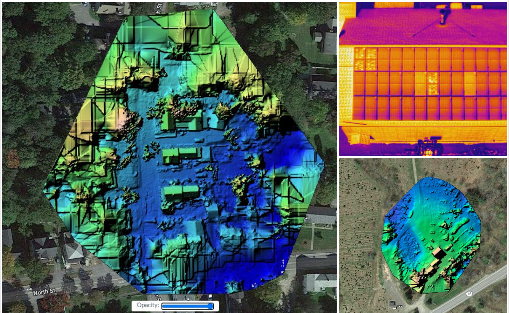
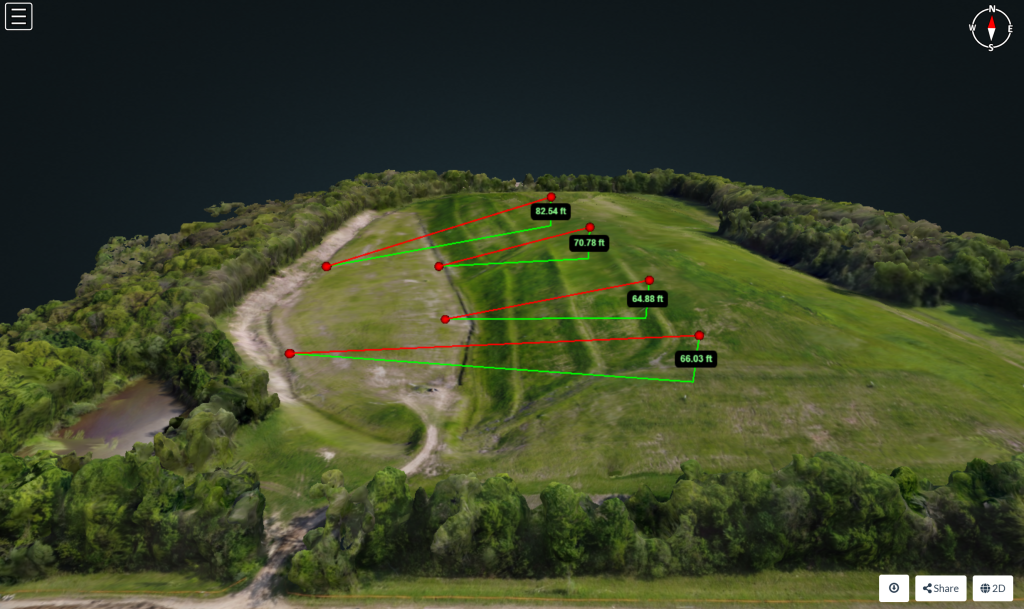
If you’re serious about this industry, learn photogrammetry. Learn thermography. These are high-demand skills in sectors like agriculture, construction, utilities, and infrastructure—and the professionals who master them are getting paid what they’re truly worth.
If you bought a drone for fun and want to keep it recreational, that’s great—there’s absolutely a place for that. But if you’re aiming to turn this into a career, understand this: basic drone photography is a crowded space. There are countless brothers, sisters, friends, cousins, and neighbors willing to do it for next to nothing.
So, what sets you apart?
Your willingness to go beyond the basics.
Take the time to learn advanced applications. Build your skill set. Position yourself in niches where quality, precision, and reliability matter.
That’s where the real value—and opportunity—lives in this industry.